Rock Identifier · Crystal identifier app for iPhone
Crystal identifier: what crystal is this?
Snap a crystal point, a cluster or a tumbled stone. Rock Identifier tells you what it is, what it's made of and what it has traditionally been said to mean.
Free · iPhone
Points, clusters, tumbles
Rough or polished, one photo is enough
Crystal meanings
Traditional meanings and birthstones
Property sheet
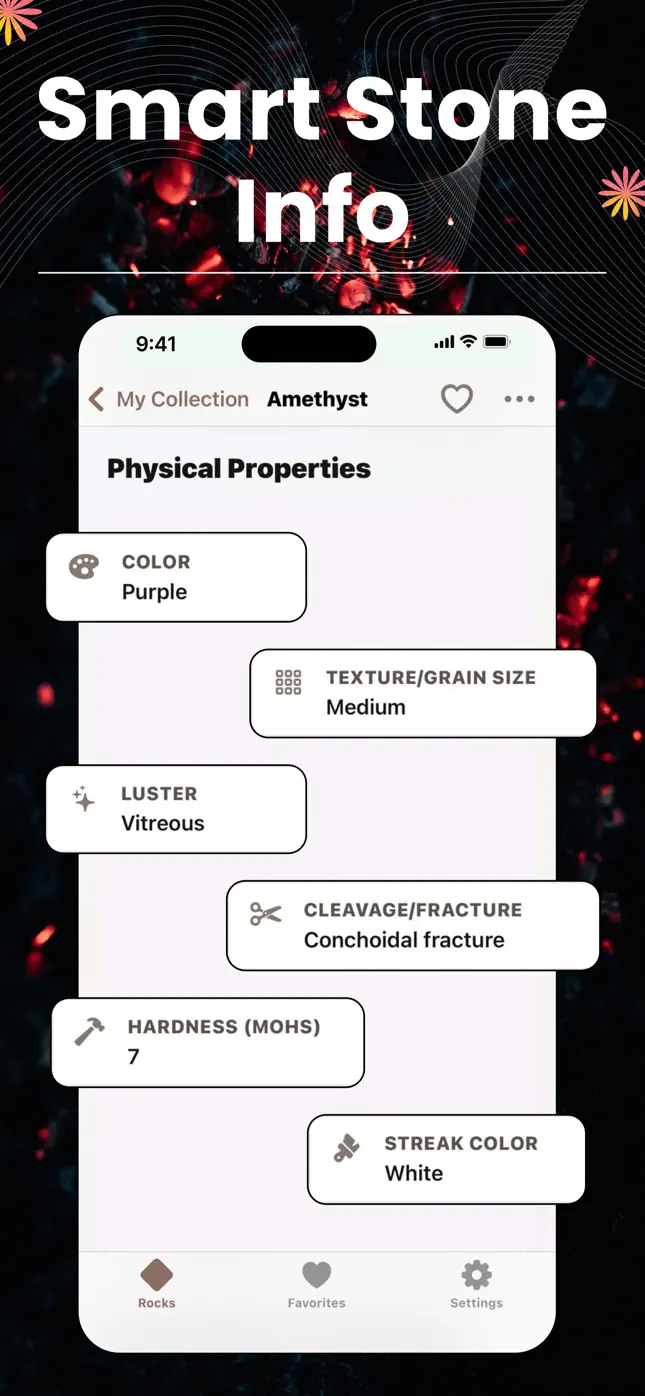
Hardness, luster, streak and fracture
AI rock expert
Ask as many questions as you like
How it works
How to identify a crystal by picture
1
Photograph one crystal
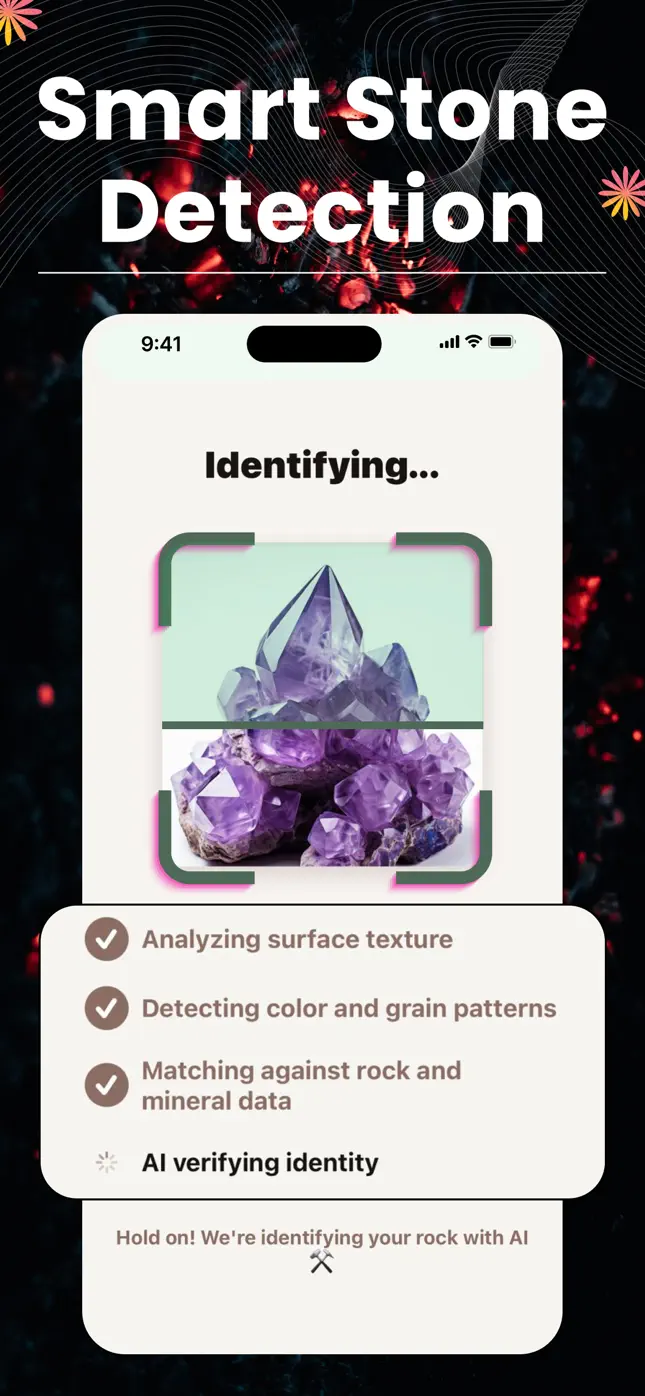
Tap the camera and fill the frame with a single crystal, or pick a photo you already took. Daylight and a plain background help.
2
Let the AI study it
Rock Identifier looks at the crystal's color, texture and shape, then compares them with its rock and mineral data.
3
See what crystal it is
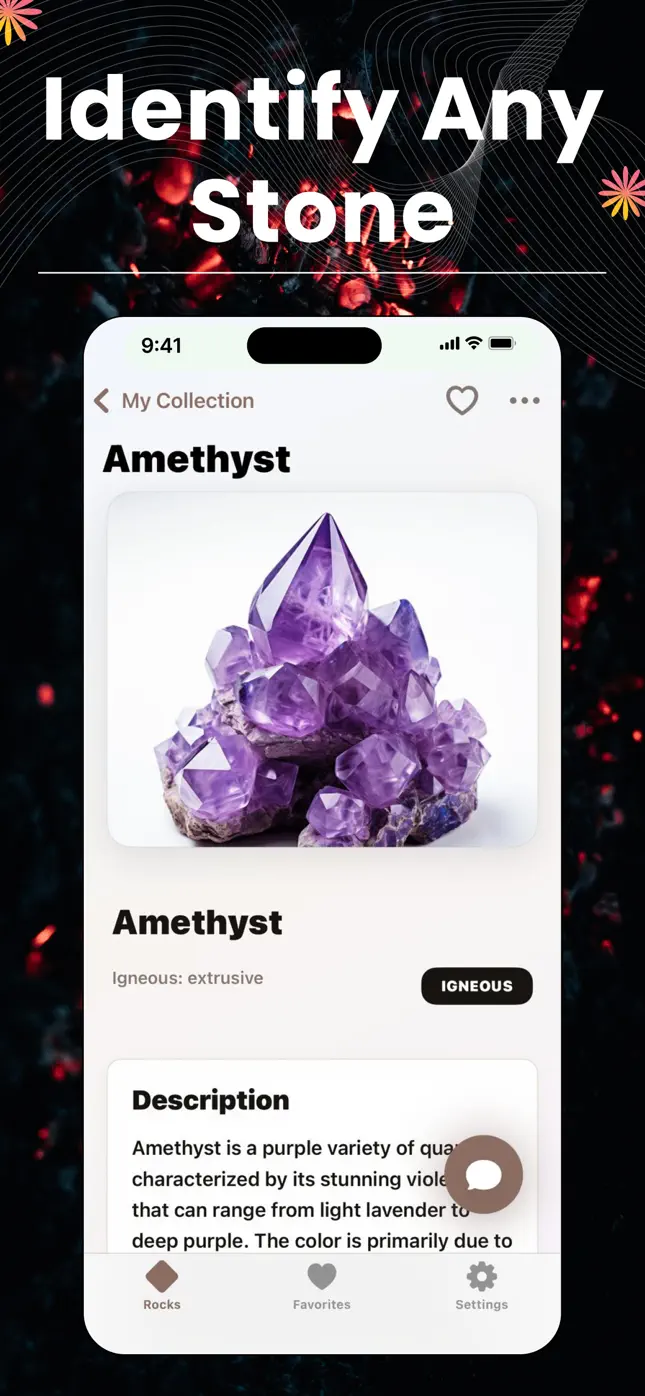
Get its name, rock class and a short description, with its properties, composition and traditional meanings further down.
Crystal identifier
What crystal is this? Find out from a photo
Crystals that look alike in a shop or a drawer can be very different stones. Point the camera at one and Rock Identifier names it in a few seconds, whether it's rough, polished or still on the rock.
Crystal points, clusters, geodes and tumbled stones
Name, rock class and a plain description
Tip: one crystal per photo, clean and dry
Crystal meanings
What your crystal is said to mean
Every crystal you identify comes with the meanings traditionally linked to it. Amethyst, for example, has long been associated with calm, and rose quartz with love. It's shared as folklore and tradition, not as scientific or medical fact.
Meanings traditionally linked to each crystal
Birthstones by month
Zodiac stones
Common crystals
Quartz, amethyst, citrine and rose quartz
The crystals people ask about most are all forms of quartz. Rock Identifier names them and thousands of others, from fluorite and calcite to selenite, and saves each one to your collection.
Clear quartz, often in six-sided points
Amethyst and citrine, the purple and yellow kinds of quartz
Rose quartz, soft pink and usually found as chunks, not points
How to identify crystals
Check it against the crystal in your hand
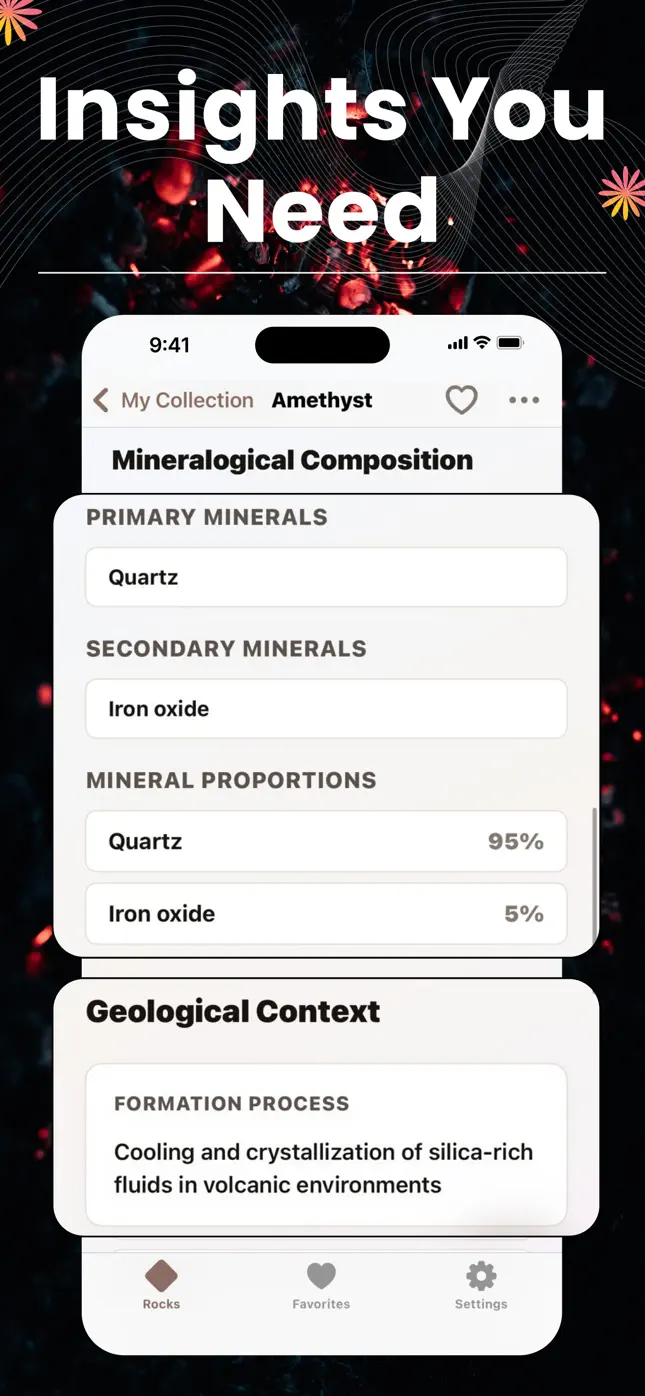
A name is a good start. The property sheet shows what to look for to confirm it: how hard the crystal is, how it shines and how it breaks.
Mohs hardness: quartz is a 7, harder than glass
Color, luster and streak color
Cleavage or fracture, and what it's made of
AI rock expert
Ask anything about your crystal
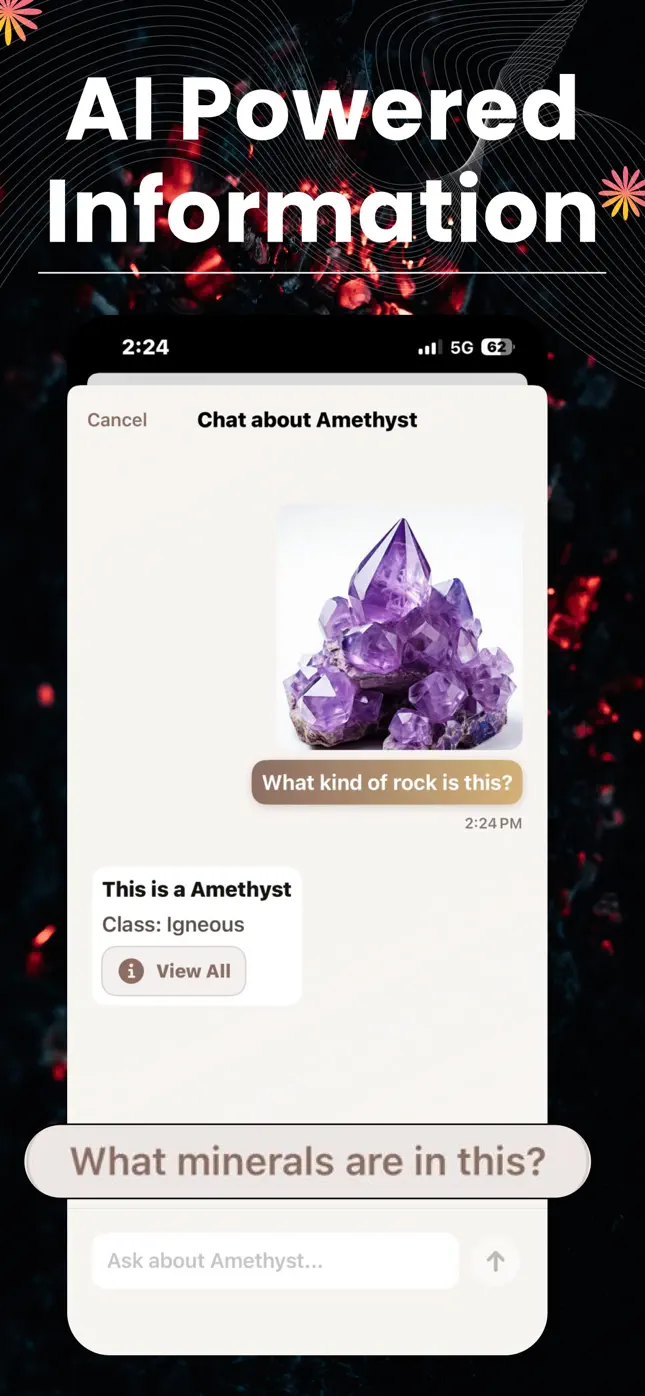
Is it amethyst or purple fluorite? Where is it usually found? Can it get wet? Ask the AI rock expert about the crystal you identified, as many questions as you like.
Follow-up questions in a chat
Mineralogy and geology in plain language
Answers based on the crystal you identified
Good to know
A photo can't prove a crystal is real
Rock Identifier tells you what a crystal most likely is from how it looks. Glass, resin, dyed stones and lab-grown crystals can look very close to the real thing, and like any photo tool the app can get things wrong.
Use the result to narrow down what you have
Compare hardness, luster and fracture with the property sheet
Before you buy or sell a valuable piece, see a certified gemologist
Crystal meanings, birthstones and zodiac stones are folklore, shared for interest. They're not scientific fact and not a replacement for medical care.
Who it's for
For anyone with a crystal they can't name
Crystal collectors
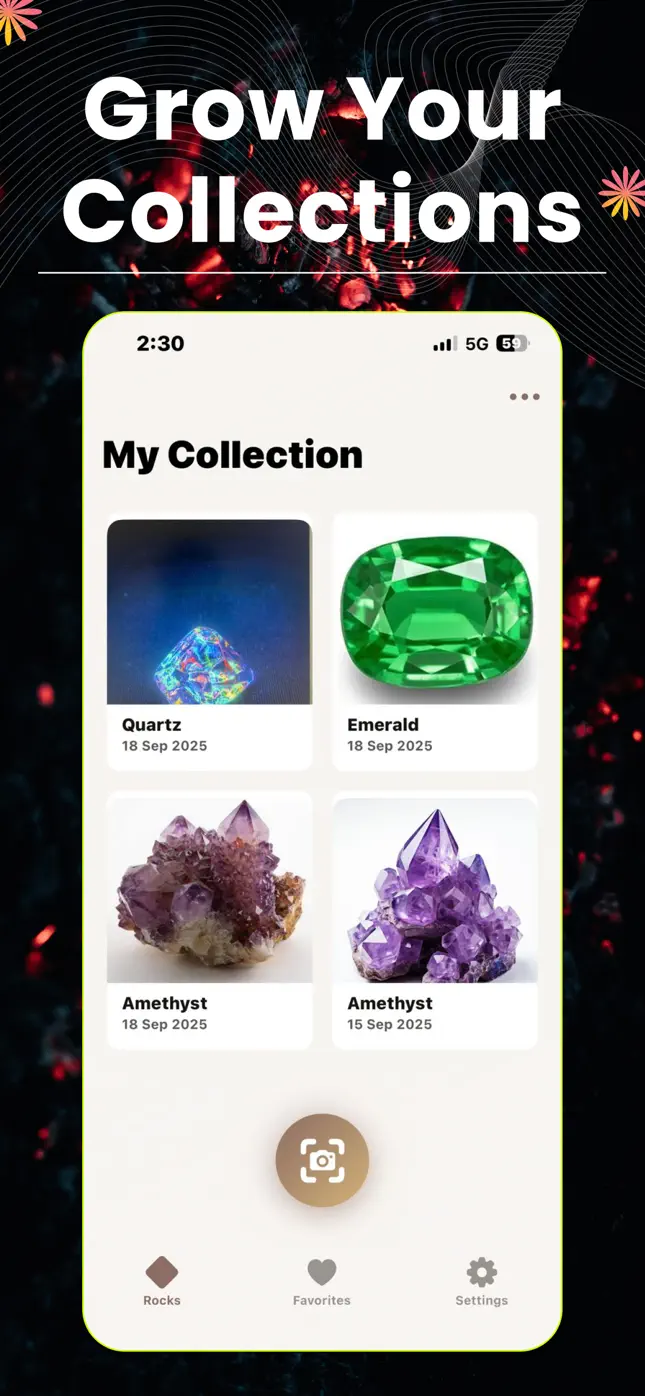
Put a name to every piece on the shelf and keep track of your collection.
Shoppers
Check what a crystal is before you buy it, then ask a gemologist about value.
Rockhounds
Name the crystals and geodes you find on the trail or at the creek.
Gift givers
Find a birthstone or a crystal with the meaning you have in mind.
Take a photo with Rock Identifier and it names the crystal in a few seconds, with its rock class, a description and its physical properties. For the best result, photograph one clean, dry crystal in daylight against a plain background.
How do I identify crystals?
Look at the color, the shape of the crystal, how it shines (its luster) and how it breaks. Hardness helps too: quartz is a 7 on the Mohs scale, harder than glass. The quickest way is to take a photo with a crystal identifier app like Rock Identifier, then compare the property sheet with your stone.
Is there an app to identify crystals?
Yes. Rock Identifier is a crystal, rock and gemstone identifier for iPhone. Take a photo of a crystal and it tells you what it is, with its properties, its traditional meanings and an AI rock expert for your questions.
How can I tell if a crystal is real?
Rock Identifier can tell you what a crystal most likely is, but it can't prove that it's real, natural or untreated. Some signs are worth checking: glass imitations often have tiny round bubbles, and very bright, even colors can mean a stone has been dyed. Real rose quartz is usually cloudy rather than glass-clear. For a sure answer, take it to a certified gemologist.
Is my citrine real or heated amethyst?
Natural citrine is usually pale yellow to honey-colored. A lot of the citrine sold today is amethyst that has been heated, which tends to be a deeper orange, often darkest at the tips of a cluster. Both are quartz, so a photo can't tell them apart for certain. A gemologist can.
Does it show crystal meanings?
Yes. Each crystal comes with the meanings traditionally linked to it, plus birthstones by month and zodiac stones. That content is folklore, shared for interest, not scientific or medical fact.
Can it identify tumbled stones and clusters?
Yes. It works with crystal points, clusters, geodes, tumbled stones and rough pieces. Tumbled stones have lost their crystal shape, so color and luster matter more. If the first result isn't clear, try a second photo in different light.
Is the crystal identifier free?
Crystal identification is part of Rock Identifier. Free to download. Try it free on your first stone, and ask as many questions as you like about it.
Which devices does it work on?
Rock Identifier is an iPhone app.
Find out what crystal you have
Free to download. Try it free on your first stone, and ask as many questions as you like about it.